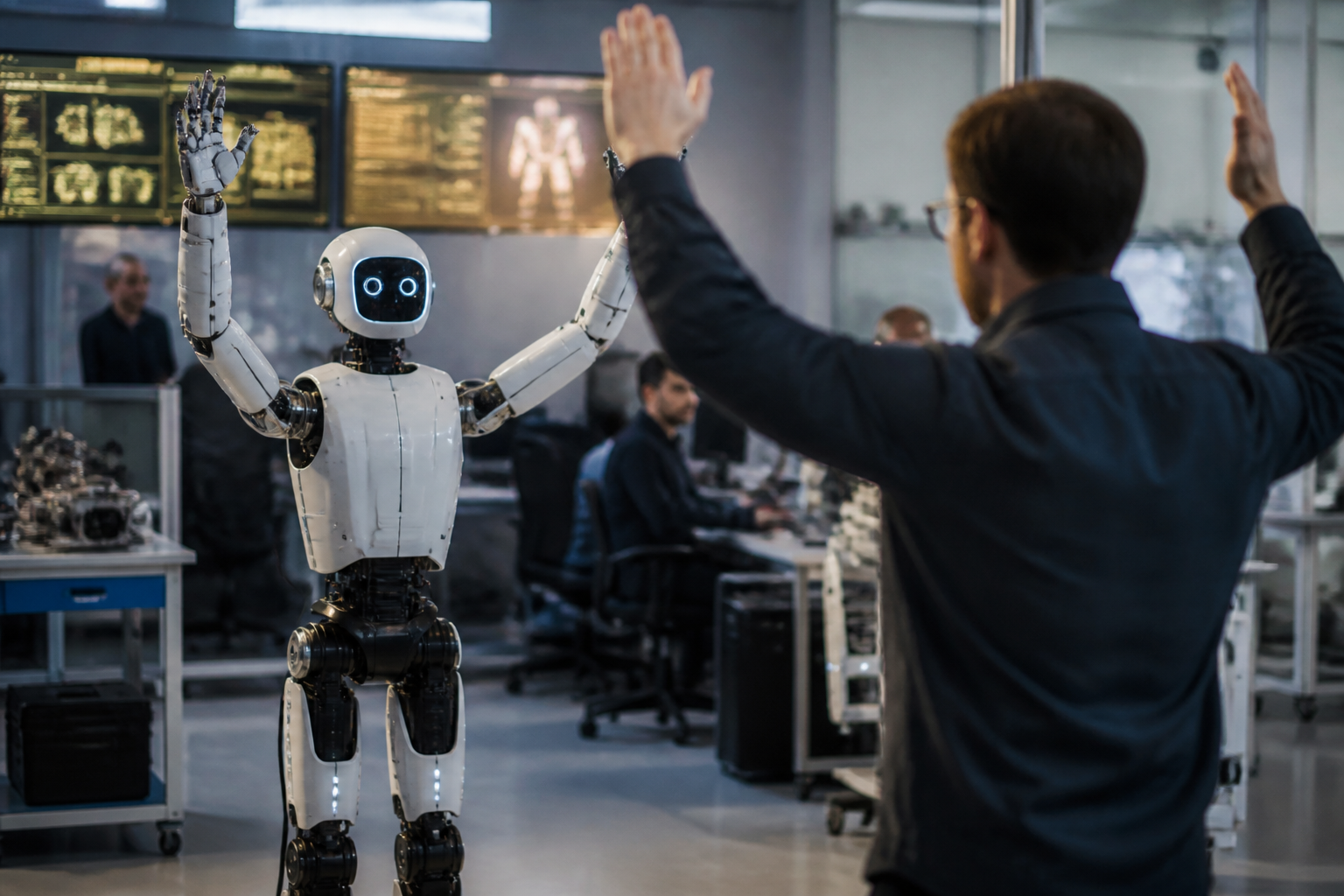
Dyna Robotics Trains DYNA-2 on a Million Hours of Human Video, No Robot Data
The claim matters because of where the field's constraint sits. Generalist robot policies have been trained largely on teleoperated action data: humans physically guiding robots through tasks, hour by hour. That data is expensive and slow to collect, and it has capped how far robot foundation models can scale. DYNA-2's bet is that the physical intuition robots need can be learned from video of humans doing things, then transferred to robot hardware. "By building a World-Action Model that… [...]
Rating
Innovation
Pricing
Technology
Usability
We have discovered similar tools to what you are looking for. Check out our suggestions for similar AI tools.
The app store for robots has arrived: Hugging Face launches open-source Reachy Mini App Store with 200+ apps
There's an app for nearly every imaginable user and use case these days, but one thing they all have in common is that they're centered around one device: the smartphone.That changes today a [...]

The robots we saw at CES 2026: The lovable, the creepy and the utterly confusing
CES always has its share of attention-grabbing robots. But this year in particular seemed to be a landmark year for robotics. The advancement in AI technology has not only given robots better “brain [...]
Nvidia releases DreamDojo, a robot ‘world model’ trained on 44,000 hours of human video
A team of researchers led by Nvidia has released DreamDojo, a new AI system designed to teach robots how to interact with the physical world by watching tens of thousands of hours of human video — a [...]
The robots we saw at CES 2025: The good, the bad and the completely unhinged
It was an interesting year for robots at CES 2025. While we had hoped the AI boom would bring a new wave of useful robots to the show, it seems that many robotics companies are still figuring out exac [...]
Black Forest Labs launches FLUX 3 capable of generating images and 20-second video with audio — but in limited release to start
Black Forest Labs (BFL) is expanding its FLUX family beyond image generation with today's launch of FLUX 3, a multimodal frontier model trained to understand and generate images, or combined audi [...]